

Shared Ropes, Shared Hearts
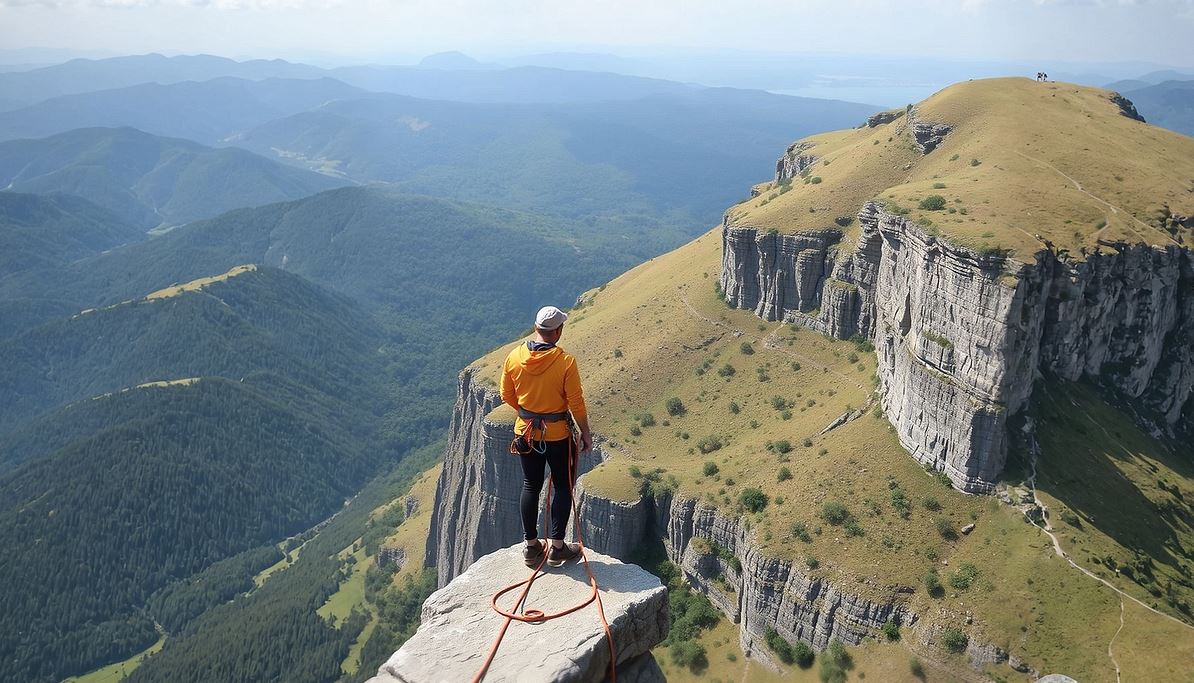
How Partnership Transforms Climbing from a Solo Struggle into a Symphony of Trust and Balance
The Unspoken Language of the Rope
Every climber understands that the rope is more than a piece of equipment. It is a living connection between two people who rely on each other completely. In the silent spaces between handholds and heartbeats, that rope carries more than weight. It carries faith. When one climber ascends, the other holds the line with precision and care, knowing that their vigilance may one day mean the difference between safety and disaster. Trust on the mountain is not declared with words but woven into the tension of every belay, the steadiness of every grip, and the calm assurance that no matter what happens, your partner is there.
Unlike many sports, climbing is a shared act of vulnerability. To climb with a partner is to reveal the limits of strength and fear in real time. Mistakes are not theoretical, they are immediate, and every move is both a test of self and a testament to partnership. Communication flows without constant speech, shaped instead by subtle gestures, rope tension, and the rhythm of movement. This mutual understanding does not form overnight. It grows through repetition, patience, and small acts of reliability that build confidence. Over time, partners begin to anticipate each other’s actions instinctively, forming a connection that feels as natural as the climb itself.
Learning to Listen Beyond Words
In the mountains, silence often speaks louder than conversation. The roar of wind, the crack of rock, and the whisper of snow all create a world where words are easily lost. True climbing partners learn to communicate through other senses. A slight tug on the rope, a change in breathing, or a shift in posture becomes as meaningful as a full sentence. Listening in this context goes beyond hearing. It is about perceiving energy and movement, reading the terrain and the human being beside you as part of one continuous flow.
This kind of listening requires humility. It demands that both climbers set aside ego and truly pay attention to each other’s signals. When one hesitates, the other pauses without judgment. When one surges forward, the other adjusts in rhythm. Miscommunication on the mountain can lead to danger, but deep listening transforms potential risk into harmony. The mountain rewards those who understand that trust begins not in action but in awareness. To listen fully is to know when to support and when to let go, when to lead and when to follow, and when to simply stand still together in shared silence.
Balancing Strength and Vulnerability
Every strong partnership on the mountain is built on the balance between independence and interdependence. Each climber must possess their own strength, skill, and judgment, but those qualities must coexist with the willingness to depend on another person. Admitting vulnerability is not a weakness but a form of courage. It allows a partner to step in when fatigue sets in, when confidence wavers, or when fear begins to take hold. Trust grows strongest when both climbers recognize that there will be moments of imbalance, and that these moments are not failures but opportunities for connection.
The act of climbing together naturally exposes human fragility. No matter how skilled or prepared one is, the environment remains unpredictable. A storm can move in without warning, a foothold can crumble, or a rope can snag at the worst possible time. Facing these challenges with a partner transforms fear into shared responsibility. Vulnerability becomes the foundation of cooperation. The willingness to admit fear allows both climbers to respond calmly and effectively rather than react with panic. Strength, in this sense, is not domination over uncertainty but unity within it. The mountain does not reward pride, it rewards balance, and that balance begins with trust in another person.
The Role of Communication and Honesty
Honesty is the quiet glue that binds climbing partners together. It is expressed not through declarations of loyalty but through consistent transparency. A climber who admits exhaustion, fear, or discomfort gives their partner the information needed to make good decisions. Concealing these truths for the sake of pride endangers both. The best partnerships are built on a commitment to truth, even when that truth complicates the plan. Communication on the mountain must be clear, concise, and rooted in mutual respect. There is no room for ego when the cost of misunderstanding can be measured in risk.
Before a climb begins, open dialogue about goals, limits, and expectations sets the tone for cooperation. During the ascent, maintaining this honesty becomes even more vital. A simple acknowledgment of fatigue or doubt can prevent mistakes that escalate quickly in high-altitude or technical conditions. Trust is reinforced every time a climber chooses openness over pretense. This communication extends beyond the climb itself, shaping how partners debrief, learn, and grow together afterward. Over time, this honesty becomes instinctive. Each partner learns to sense unspoken emotions and adapt with empathy. It is not merely about climbing the same route but about climbing it together, in both spirit and intention.
Learning to Manage Conflict in the High Places
Even the most harmonious partnerships experience tension. Fatigue, cold, hunger, and altitude can amplify small disagreements into significant conflicts. The mountain, with its unforgiving environment, reveals emotional truths that are often hidden in daily life. Managing conflict in such settings requires grace and patience. It is natural for frustration to arise when one partner moves too slowly, makes a navigational error, or struggles with fear. However, how these moments are handled determines whether trust grows or erodes.
The best climbers treat conflict not as an obstacle but as part of the journey. When frustration surfaces, experienced partners focus on problem-solving rather than blame. A calm tone, a pause for breath, or a simple acknowledgment of shared stress can defuse tension. Empathy replaces anger when both climbers remember that they share the same goal, to reach the summit safely and return together. The mountain has a way of humbling even the strongest, reminding partners that cooperation is more powerful than control. Conflict becomes an opportunity to practice patience, forgiveness, and understanding, all of which deepen the bond that keeps both climbers moving upward.
Trust in the Technical and Emotional Sense
Technical trust and emotional trust are intertwined in climbing partnerships. Technical trust comes from knowing that your partner possesses the skills and competence to handle the rope, the gear, and the terrain. Emotional trust comes from believing that they will act with care and integrity, even when conditions deteriorate. Both forms of trust reinforce each other. A technically proficient partner who lacks empathy can create unease, just as a kind and supportive partner who lacks skill can create danger. The ideal partnership balances both.
Developing technical trust takes practice and observation. Partners should train together regularly, learning each other’s habits and tendencies. Every belay, anchor, and rappel becomes an exercise in consistency. Emotional trust, on the other hand, is built through reliability over time. It grows when promises are kept, when attention is unwavering, and when small acts of support accumulate into an unspoken sense of loyalty. On the mountain, where every movement carries consequence, this dual trust becomes the invisible safety net that no equipment can replace.
Shared Rhythm and Flow: Moving as One
At its highest level, climbing with a partner evolves into a dance. Each climber anticipates the other’s timing, movements, and breathing patterns. They move not as two individuals connected by a rope, but as a single entity responding to the terrain. This state of synchronization is often called flow. It is achieved through familiarity, focus, and an almost meditative awareness of each other’s presence. When this harmony emerges, even difficult climbs begin to feel effortless, as if the mountain itself is guiding the rhythm.
Achieving this unity requires more than physical coordination. It demands emotional alignment and shared focus. Both climbers must remain fully present, aware of not only the rock beneath their hands but the energy of their partner beside them. When trust is absolute, movements become fluid, communication becomes seamless, and fear dissolves into calm precision. Flow does not occur by command but by connection. It is the natural byproduct of trust so deep that it eliminates hesitation. In these moments, the mountain becomes a shared heartbeat, echoing the quiet rhythm of partnership at its purest form.
When Trust is Tested: Facing Uncertainty Together
Every partnership encounters a moment when trust is tested. It may come in the form of a sudden storm, an injury, or a navigation error that alters the route. In such moments, the façade of control fades and the true nature of the bond reveals itself. How two climbers respond when plans crumble determines the strength of their connection. Trust does not eliminate fear, but it steadies it. It allows one climber to look at the other and find calm even when the environment turns chaotic.
When uncertainty arises, the ability to act in unity becomes paramount. Partners who trust each other communicate clearly, decide collectively, and support one another without hesitation. There is no room for blame, only problem-solving. This synergy can make the difference between crisis and recovery. These shared trials become defining memories, shaping not only the partnership but the climbers themselves. Each moment of adversity overcome together adds another layer to the foundation of trust that will support future climbs. It is in these trials that partnership transcends function and becomes something deeply personal, a shared resilience that endures beyond the mountain.
The Summit of Trust
Climbing with a partner is not simply about reaching a summit. It is about discovering the depth of connection that two people can share when their lives depend on mutual faith. Trust becomes the invisible third climber, present in every decision, every grip, and every silence. It transforms a technical endeavor into a human story of cooperation and understanding. When the summit is finally reached, it is not the height that matters but the journey of trust that made it possible. The rope that once symbolized risk now represents unity. The mountain stands as witness, silent yet eternal, to the bond forged in its shadow. In that shared victory, climbers discover that true ascent is not only vertical but spiritual, a rise into the pure space of trust, where two souls learn to move as one.